
AI Home Valuation Tools: Get Instant Property Estimates
Use our AI home valuation tool to instantly estimate your property value in Egypt based on market trends, location, and comparable real estate data.
SMART PROPERTY MANAGEMENTFUTURE OF REAL ESTATEPRIVATE RESORTSPROPERTY INVESTMENTFUTURE INVESTMENT
5/13/20264 min read

What is an AI Home Valuation Tool?
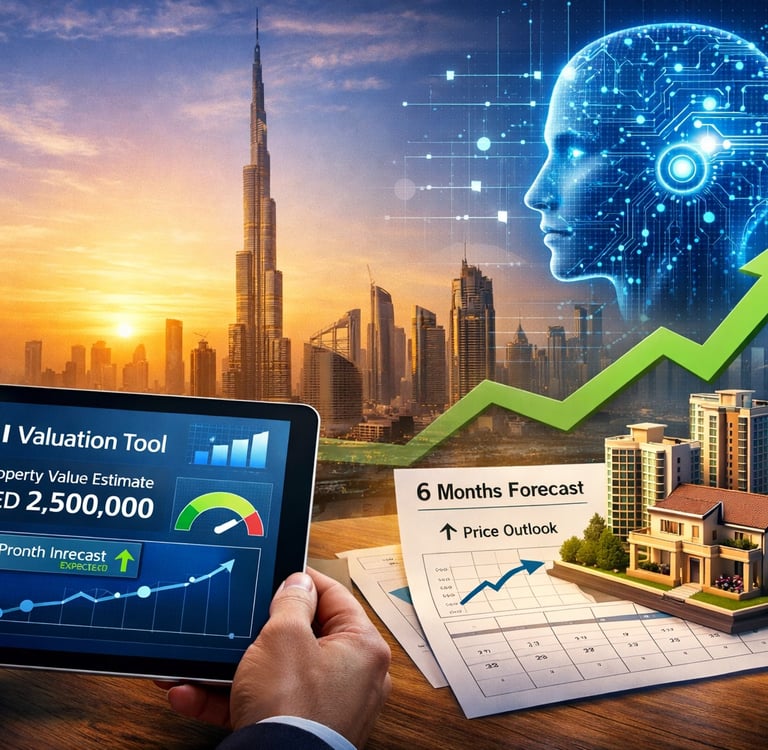
AI home valuation tools are advanced digital platforms that leverage artificial intelligence to assess property values with remarkable accuracy. These innovative tools employ a range of algorithms and machine learning methodologies to analyze vast amounts of data, enabling users to obtain instant property estimates. The primary purpose of an AI home valuation tool is to provide a seamless experience for homeowners, real estate agents, and prospective buyers by presenting a reliable gauge of a property's worth based on current market conditions.
The technology behind AI home valuation tools is grounded in data analytics. They draw information from a variety of sources, which may include public property records, recent sales data, neighborhood demographics, and even economic indicators. By synthesizing this extensive data, AI-driven systems can generate accurate property valuation estimates within seconds. This rapid response time is particularly beneficial in a fast-paced real estate market, where timely information can significantly influence decision-making.
Machine learning plays a crucial role in enhancing these tools’ performance over time. As more data becomes available and user interactions are analyzed, the algorithms can adapt and refine their predictive capabilities. This continuous learning process ensures that AI home valuation tools remain relevant and precise, providing users with estimates that reflect the current housing landscape. Additionally, the incorporation of user feedback allows these tools to evolve, improving their overall accuracy and reliability.
In summary, AI home valuation tools represent a significant advancement in real estate technology. By harnessing the power of artificial intelligence, these tools not only streamline the valuation process but also enhance the user experience by offering quick, data-driven insights into property values.
How AI Valuation Tools Work
AI valuation tools operate by utilizing advanced algorithms and machine learning techniques to analyze various data points related to real estate properties. The process begins with data collection, where information about the property such as its location, type, size, and additional features like the number of bedrooms and bathrooms is gathered. This initial data serves as the foundation for the valuation process.
Once the data is collected, it is processed through sophisticated AI models that leverage historical data and current market trends. These models are trained on vast datasets, allowing them to recognize patterns and factors that influence property values. For instance, geographic elements, neighborhood characteristics, and recent sales data can significantly impact the valuation. The AI tools integrate these variables to offer a comprehensive estimate of a property's worth.
An essential aspect of AI valuation tools is their ability to adapt to changing market conditions. By continuously updating their algorithms with the latest data, they can provide more relevant and accurate estimates. This adaptability makes them a valuable resource for various stakeholders, including buyers, sellers, and real estate professionals. Moreover, some tools may also incorporate user-generated feedback to refine their predictive capabilities, enhancing the model's accuracy over time.
In summary, AI valuation tools streamline the complex real estate valuation process, making it more efficient and accessible. By harnessing a wealth of data and employing cutting-edge technology, these tools help deliver instant property estimates that can guide users in making informed real estate decisions.
Benefits of Using AI Home Valuation Tools
The advent of AI home valuation tools has revolutionized the real estate landscape by providing numerous advantages over traditional appraisal methods. One of the primary benefits is accuracy. AI-driven platforms leverage vast datasets, including historical sales data, neighborhood trends, and economic indicators, which enables them to generate precise property estimates. These estimates are not only reliable but also reflect the dynamic nature of the real estate market, making them more effective than traditional appraisals, which may rely on outdated information.
Speed is another significant advantage of AI valuation tools. In a fast-paced market, the ability to receive instant property estimates can empower buyers and sellers to make informed decisions quickly. Unlike traditional appraisals that can take days or weeks, AI tools provide results within minutes. This rapid response can be crucial in a competitive environment where time is of the essence.
Accessibility further distinguishes AI home valuation tools from conventional methods. Many of these platforms are available online, allowing users to access property valuations from anywhere, including their homes or offices. This democratization of information empowers individuals who may not have had access to traditional appraisal services due to geographical, financial, or logistical barriers. For example, a homeowner can easily use an AI tool to determine their property’s value before listing it for sale, enhancing their negotiating power.
Moreover, AI valuation tools are often more cost-effective than traditional methods. Users can avoid hefty appraisal fees, making home valuation an economical part of the real estate process. For instance, a first-time homebuyer might utilize an AI-powered platform to assess multiple properties without incurring substantial costs, enabling them to make better financial decisions.
In conclusion, the ability to obtain accurate, speedy, accessible, and affordable property estimates through AI home valuation tools presents a transformative benefit in the real estate market. This technology not only streamlines the valuation process but also enhances the user’s overall experience, making it a valuable resource for all participants in real estate transactions.
Limitations and Considerations of AI Home Valuation Tools
While AI home valuation tools have gained widespread popularity for providing quick property estimates, it is essential to understand their limitations. One primary concern relates to the accuracy of the data on which these tools are trained. Many AI valuations rely on public records and historical sales data, which may not reflect current market conditions. This lack of real-time market insight can result in estimates that do not accurately represent a property's current worth.
Another consideration is the inherent complexity of the real estate market, which involves numerous variables, including local economic conditions, neighborhood developments, and property-specific features. AI models, despite their sophisticated algorithms, may struggle to account for these nuances, leading to oversimplifications in their valuation outputs. Additionally, properties with unique characteristics may be undervalued or overvalued due to the AI's reliance on comparative analysis without actioning individual merits.
Moreover, while AI valuations can serve as a beneficial starting point, they should not replace human expertise and judgment. Real estate professionals possess valuable insights about local markets and the ability to conduct on-site assessments, which AI cannot replicate. Therefore, it is advisable to use AI home valuation tools in conjunction with traditional methods such as appraisals and real estate agent consultations to obtain a more comprehensive view of a property's value.
In summary, while AI home valuation tools are valuable resources for making quick property assessments, their limitations highlight the importance of human oversight in the valuation process. Users are encouraged to combine AI-generated estimates with professional evaluations to facilitate informed decision-making in real estate investments.